nosework and scentwork
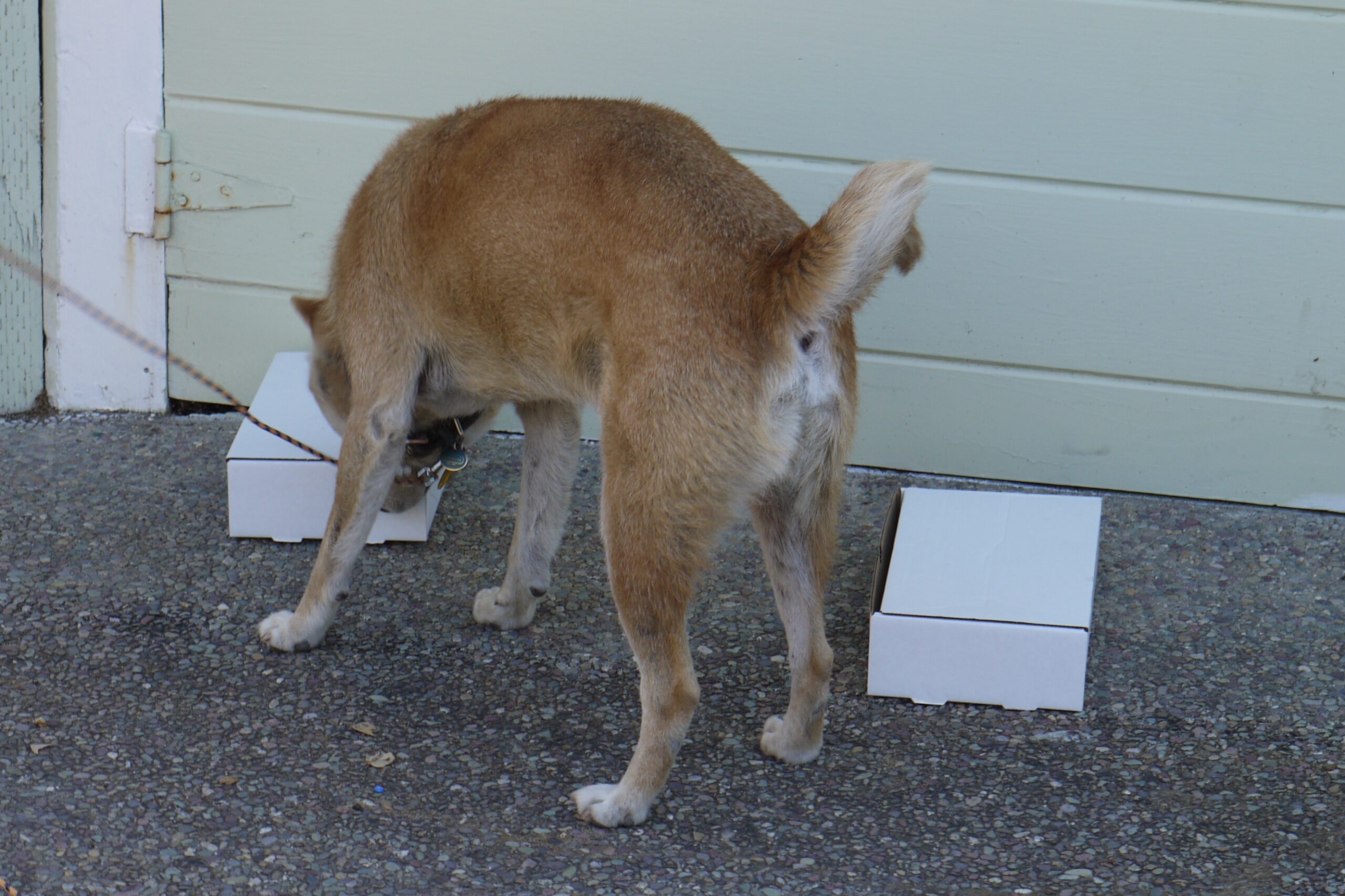
Nosework (NACSW) and Scentwork (AKC) require the dog to identify specific essential oil odor in various locations.
nosework and scentwork
“Nosework” refers to the sport established by the National Association of Canine Scentwork (NACSW) and the United Kennel Club (UKC). “Scentwork” refers to the similar sport administered by the American Kennel Club (AKC).
These organizations have similar, but different aspects, rules and regulations. For example, in NACSW nosework, there are 3 essential oils used — birch (Betula lenta), anise (Pimpinella anisum) and clove (Eugenia caryophylatta). In AKC scentwork, these oils are also used, but cypress (Cupressus sempevirens) is also used in “Master” class trials. In UKC nosework, the same birch and anise oils are used, but the clove oil can be either E. caryophyllata or Syzgiium aromaticum. In addition, in UKC “Master” classes, myrrh (Commiphora myrrha) is used and in “Elite” classes, vetiver (Vetiveria zizanoides) is used.
As a general rule, dogs are started in the sport with food as the “odor,” but they typically switch to odors fairly soon. Birch is usually the first odor introduced to the dogs, but it’s usually very easy to add the other odors to the dogs’ repertoire of scents.
EQUIPMENT
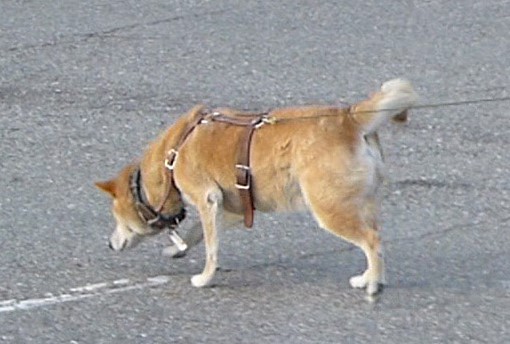
Regardless of the searches, the dog should wear either a comfortable collar or non-restrictive harness. I see some dogs wearing restrictive harnesses, but they look pretty uncomfortable to me, so I use and recommend a non-restrictive harness (like the one shown in the photo of my Shiba Inu, Take, as he was tracking on asphalt).
The different organizations have different rules about equipment (e.g., leashes, etc.), so it’s best to familiarize yourself with the specific rules and regulations applicable to your chosen organization. We’re flexible in training, but it’s good to practice in the same manner as you’re going to trial (assuming you’re going to trial).
Unlike most AKC events, in AKC scentwork, you can reward your dog with food or a toy when they find the odor of interest. NACSW has always allowed handlers to reward their dogs with food or toys. This makes finding the odors even more reinforcing for the dogs. You’ll want to use rewards that are of high enough value to the dog that they will REALLY want to find the odor. But, you’ll need to be careful in how you provide the treats and be sure that neither you or your dog drop any!
Do i have to participate in trials?
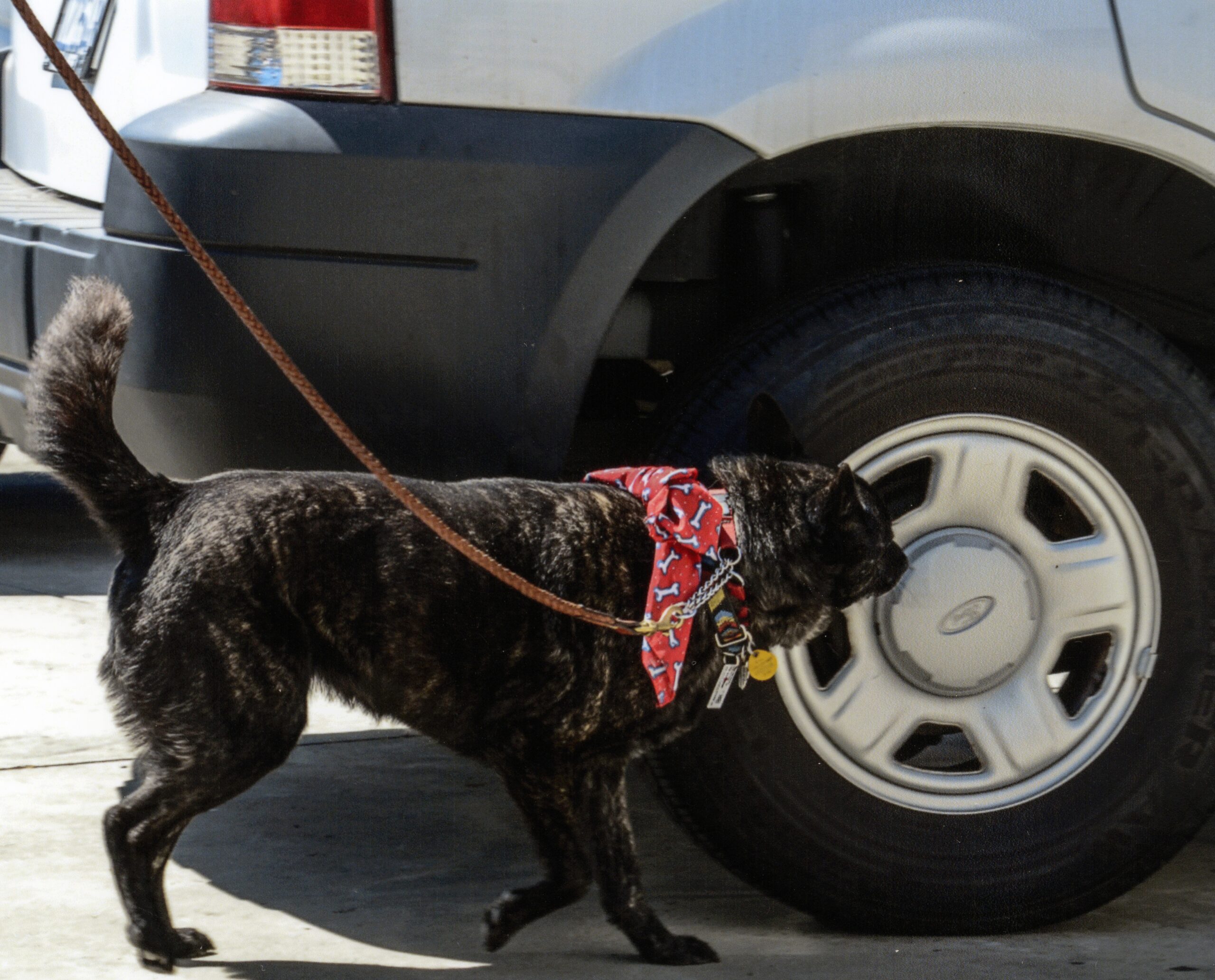
Definitely not! It’s totally up to you, whether or not you want to participate in any trials. Many owners just play the game with their dogs just for fun. If you want to participate in trials, we’ll be sure that you and your dog have experience with the different types of searches that you’ll encounter. For example, while NACSW, AKC and UKC all have “container” searches, in which the dogs search boxes or other containers for the one(s) containing the odor(s), NACSW also has vehicle searches and AKC has buried searches. Depending upon your location, there may be more opportunities to trial with a particular organization and not with another.
Once the dog understands the game, it’s easy to go back and forth between trials held by the different organizations. Sometimes, the problems are more with the handlers, as you need to remember the different rules that apply to each organization. But, it can be done!
How It Works

First intro class
We’ll start in a class setting, with dogs learning to search boxes to find tasty treats or their favorite toy. This first session is “Introduction to Nosework” and provides a strong foundation for the more advanced skills.

next class
Once the dogs are good at searching and finding food in boxes, we introduce the odors. It’s a step-wise progression, adding the different odors and helping the dog be successful at finding them in different settings.

Advanced searches
As the dogs become proficient at finding odors in various settings and search areas (containers, interiors, exteriors, vehicles, buried, etc.), we make the searches increasingly more challenging for the dogs.
Why Choose Us
01. experience
I’ve been involved with NACSW nosework almost since the sport was initiated. My Shiba Inu earned his NW1 title and my Kai Ken earned her NW3 title. My Hokkaido and Shikoku are working on their NACSW and AKC titles.
02. Understanding
I’ve “been there, done that,” including with dogs that are often considered “difficult to train.” I get it and will be there to help you and your dog be both successful AND have fun!
03. flexibility
As the dogs work individually, nosework is an ideal activity for reactive dogs. We can work together in a class format or in private sessions — both work well! You and your dog will help determine the best format for you.
04. Positive approach
Positive reinforcement is a hallmark of nosework. We do not use any harsh training methods or equipment. We emphasize the positives of searching, finding, and being rewarded for finding the odor(s) of interest.
Don’t Take Our Word For It
Frequently asked questions
Lorem ipsum dolor sit amet consectetur adipiscing elit sed do.
Your Title Goes Here
Your content goes here. Edit or remove this text inline or in the module Content settings. You can also style every aspect of this content in the module Design settings and even apply custom CSS to this text in the module Advanced settings.
Your Title Goes Here
Your content goes here. Edit or remove this text inline or in the module Content settings. You can also style every aspect of this content in the module Design settings and even apply custom CSS to this text in the module Advanced settings.
Call to Action
K9 Scentsability
About
Services
Service 1
Service 2
Resources
Blog
Contact
Join the Mailing List
Privacy Policy | Terms of Use | Cookie Policy
© 2023-2025 K9 Scentsability, All Rights Reserved.